


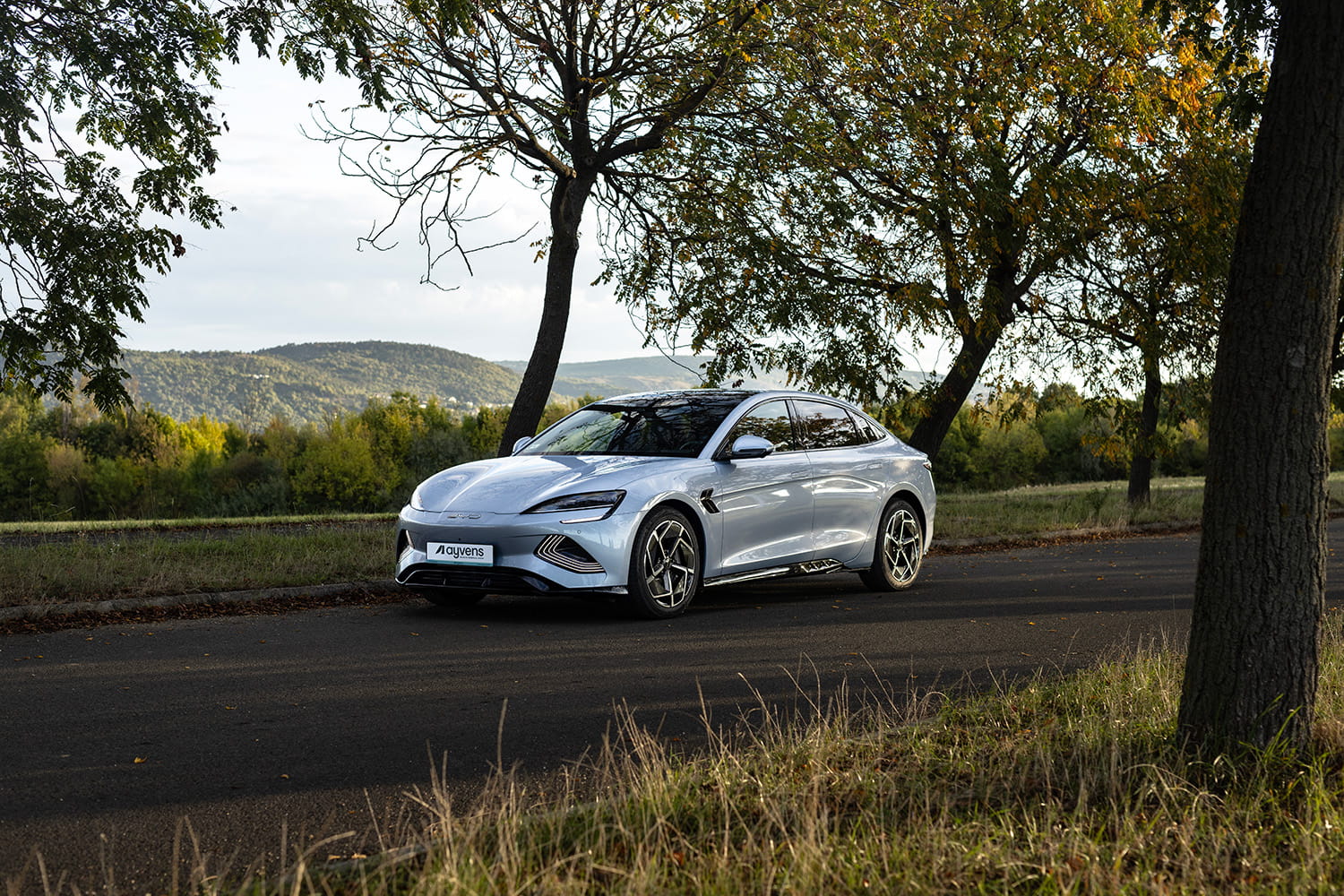
5 tips from a photographer: how to take professional photos of your beloved car
Without experience, it can be difficult to take photos of your a car in a way that showcases its shape properly, avoids distortions in its proportions, and captures its finer details. In our latest article, photographer Péter Mosoni shares his most important tips for taking striking and professional-looking car photos. These techniques can be especially effective in autumn, when nature’s vibrant colors provide the perfect backdrop for capturing your four-wheeled travel companion.
1. Composition basics: from the golden ratio to symmetry
The foundation of a great photograph is thoughtful composition. The purpose of arranging visual elements within an image is to convey emotions and ideas to the viewer. Depending on the impression you want to create, it is to worth consider lines, shapes, light and shadow contrasts, textures, and colors. While lines and other visual guides can direct the viewer’s attention in a specific direction, the contrast between darker and lighter areas can add tension and visual interest to the image.
It is also worth to experiment with perspective and direction. Perspective creates a sense of depth and distance by showing how objects relate to one another within the frame, while symmetry often conveys a sense of order and balance. The golden ratio, meanwhile, helps create a natural sense of harmony within the composition. Its essence lies in positioning the subject in a way that naturally draws the viewer’s attention, making it the focal point of the image.
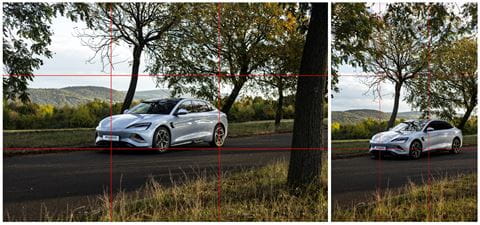
2. Steering wheel and wheel positioning
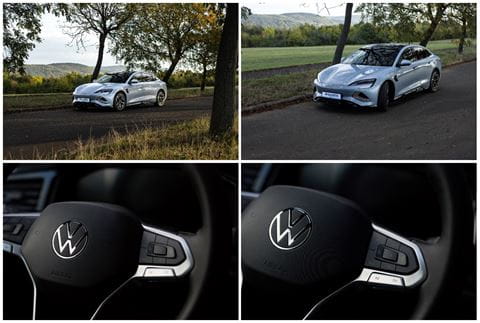
It may seem like a small detail, but it has a significant impact and applies to every type of vehicle: make sure the wheels are not turned at an awkward angle or facing the camera with the tire tread fully visible. Instead, they should be positioned straight or turned slightly inward, creating a more balanced and harmonious overall appearance.
The same principle applies to interior shots of a car. Ensure that the steering wheel is perfectly straight and that the vehicle's emblem is positioned horizontally. These subtle touches of symmetry help create a more polished and professional-looking image.
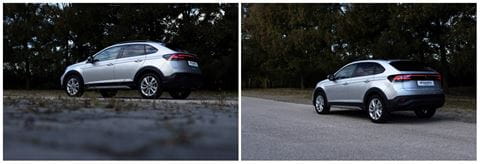
3. Angle and height: What should the image convey?
The angle and height from which a photograph is taken can significantly influence its mood and visual impact. If your travel companion is an SUV, for example, shooting from a lower viewpoint can make it appear more imposing and powerful. The same approach, however, may be less flattering for a small city car.
It is also important to pay attention to framing during composition. Avoid placing the car too close to the edge of the image, as lens distortion can negatively affect the overall appearance and make the vehicle look unnatural.
4. Keep distracting elements out of the frame
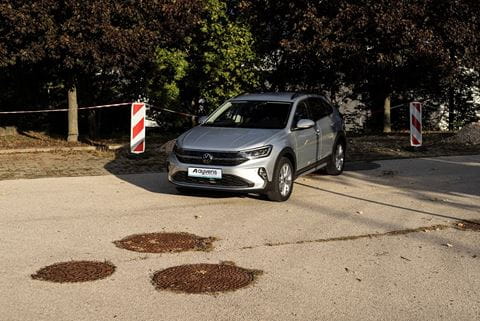
When photographing your beloved car, the goal is for it to be the clear focal point of the image. Unwanted shapes or objects appearing in the background or foreground can detract from the photo’s visual appeal, while reflections on the bodywork can easily draw attention away from the subject.
Before taking the shot, always check the surroundings and carefully consider your framing. The cleaner and more uncluttered the environment, the stronger the visual impact of the main subject will be.
5. Fine details: cleanliness above all
For a professional-looking photograph, it is essential that the car is clean, especially when capturing close-up shots of interior details. Dirt, fingerprints, and dust particles are mercilessly highlighted by the camera and can quickly diminish the quality of the image.
The only exception is when a dirty vehicle is part of the intended concept. For example, with off-road vehicles, mud and dust can help emphasize the spirit of adventure and the experiences the car has been through. In all other cases, it is worth thoroughly cleaning the vehicle before the photoshoot to avoid being disappointed by unwanted imperfections later.
These composition principles apply regardless of the device you use, whether it is a professional camera or a smartphone. Modern smartphones are capable of producing excellent images, but according to Péter Mosoni, it is best to avoid excessive use of built-in filters and follow the principle that “less is more.”
If your phone features multiple cameras, experiment with different focal lengths (such as 1x or 0.5x) to find the most flattering perspective. When shooting with a smartphone, it is also worth stepping back and using a 2x zoom setting, or an even longer telephoto lens if available. This can help capture the car with more natural proportions while still leaving enough space in the frame to showcase the carefully chosen surroundings.

.jpg?rev=3d39083d27da4cd4b70d202116ad7de7&mw=600&io=transform%3Afill%2Cwidth%3A600)