



Electric vans: 5 myths still holding businesses back
Is your business ready for an electric van – or are outdated perceptions holding you back?
Today, more and more businesses are exploring the possibility of switching to electric vans. The technology has developed significantly, and the latest models are capable of meeting the needs of many companies.
Here, we look at five of the most common myths about electric vans – and examine what the reality looks like today.
Electric vans are no longer just for early adopters
A few years ago, electric vans were often seen as a niche option. Limited range, few models and uncertainty about charging led many businesses to stick with diesel and petrol vehicles. Today, the situation is very different. Technology has advanced rapidly, and modern electric vans can meet the needs of a wide range of businesses – from tradespeople and installers to service and delivery operations.
However, several misconceptions still persist, causing some companies to overlook opportunities for lower operating costs and a more future-ready transport solution.
Myth 1: An electric van will run out of charge before the workday ends
Modern electric vans offer a driving range that covers the daily driving requirements of most businesses. And when additional charge is needed, rapid charging makes it possible to top up the battery and gain extra range during the working day.
For most businesses, an electric van can comfortably complete a full day’s work on a single charge.
Myth 2: Electric vans cannot carry enough load because of the battery
Today’s electric vans are designed for commercial use and, in many cases, offer payload capacities and cargo space that match the day-to-day requirements of businesses. As a result, the battery is rarely the limitation it once was.
For most companies, the available payload is more than sufficient – the key is simply choosing the model that best suits the job.
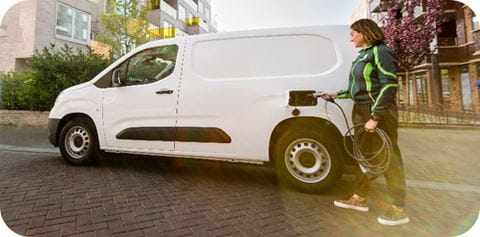
Myth 3: Charging an electric van is inconvenient and reduces productivity
Many businesses charge their vans overnight either at company premises or at the driver’s home. This means the vehicle is fully charged and ready to go when the working day begins. At the same time, the growing network of public charging stations makes it easy to top up while on the road if needed.
With the right charging strategy in place, charging often becomes a natural part of daily operations without affecting productivity.
Myth 4: Electric vans are too expensive compared to diesel vans
Historically, electric vans have been significantly more expensive than conventional vans, mainly because the battery remains a substantial part of the vehicle’s overall cost. This is still generally true when looking only at the purchase price. However, when considering the total cost over several years – including energy, servicing, maintenance, taxes and potential leasing costs – electric vans can often be more cost-effective than diesel alternatives.
For this reason, Ayvens always recommends evaluating vehicles based on their Total Cost of Ownership (TCO). TCO provides a complete picture of all costs associated with a vehicle throughout its lifecycle, enabling a more accurate comparison between electric and diesel vans. In other words, look beyond the upfront price. Electric vans can be a smart long-term investment.
Myth 5: My customers do not care whether I drive diesel or electric
Today, more customers and business partners are placing greater emphasis on sustainability. In many sectors, climate and environmental considerations already play a role in tenders, supplier assessments and partnership agreements. As a result, choosing an electric van can strengthen both your company’s profile and its competitive position. It is not just about transportation – it can also be a business advantage.
When does it make sense to switch to electric?
There is no one-size-fits-all solution. The right choice depends on factors such as:
- Daily mileage
- Payload and cargo space requirements
- Number of vehicles in the fleet
- Charging options
- The company’s growth and sustainability ambitions
For many businesses, the first step is to gain a clear understanding of their current driving patterns. This makes it easier to assess whether an electric van can meet operational requirements – and, if so, which model is the best fit,
Choose the solution that fits your business Electric vans are now a realistic option for many businesses, but that does not mean they are the best solution in every situation. The most important thing is to evaluate your company’s specific requirements and choose the solution that delivers the greatest value in day-to-day operations.


.jpg?rev=817dc32e8771430e868a9994d20f07e3&mw=600&io=transform%3Afill%2Cwidth%3A600)