


The new geography of fleet electrification
Why global electrification ambitions increasingly depend on local economics, infrastructure, policy and market readiness.
As electric vehicles (EVs) move into the mainstream, successful fleet strategies will depend on understanding where, when and for whom the transition makes sense.
The direction of travel is clear. Across industries and geographies, companies are working to reduce the emissions generated by their fleets. Electric vehicles are becoming available across more segments, their economics are improving, and a growing number of drivers now see them as a realistic alternative. But clarity about the destination should not be mistaken for simplicity in getting there.
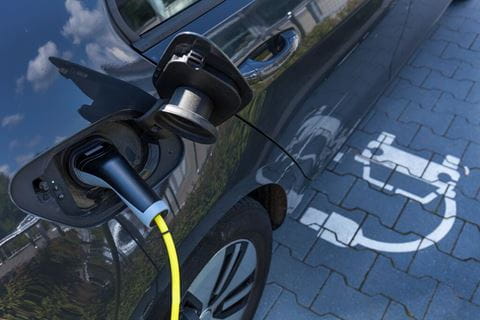
Electrification is progressing at markedly different speeds around the world. Local taxation, charging infrastructure and total cost of ownership all influence the business case. Just as importantly, drivers do not have the same mobility needs or readiness to change.
For multinational companies, this creates a strategic tension: sustainability ambitions may be global, but the conditions for delivering them remain decidedly local.
According to Fabio Carello, Global Director of Innovation, Product & Consultancy at Ayvens, the next stage of fleet electrification will require a more nuanced approach.
"It is not realistic to apply exactly the same approach across every country. Companies need a clear global trajectory, but the pace and implementation must reflect the reality of each market.”
The economics are changing, but unevenly.
One persistent misconception is that electric vehicles invariably cost more than their internal combustion engine equivalents.
Purchase price remains highly visible, but it does not tell the whole story. Fleet decisions must account for the total cost of ownership (TCO), including energy, taxation, maintenance and other market-specific factors. In many vehicle segments and countries, the TCO of a battery electric vehicle (BEV) is already competitive with, or more favourable than, an internal combustion engine (ICE) vehicle. The latest Ayvens Mobility Guide finds that BEV total cost of ownership is competitive with, or more favourable than, ICE in selected vehicle segments in 23 of the 48 countries assessed.
These economics are not fixed, however. Energy prices, taxation and fiscal policy can shift the calculation from one year to the next. Governments are also moving away from broad purchase subsidies and relying more heavily on structural measures, such as tax advantages for electric vehicles, benefit-in-kind reductions and fiscal penalties for higher-emission alternatives.
For fleet leaders, this means electrification decisions should not be based on general assumptions about EV costs. The more relevant question is: which powertrain delivers the strongest operational and economic outcome for this vehicle segment, use case and market?

Readiness depends on the market and the driver.
Country-level conditions are only one part of the picture. Even within the same market, the right transition pace may differ across a company’s driver population.
A driver covering relatively short and predictable distances, with reliable access to home or workplace charging, faces a very different proposition from someone travelling long distances each day or operating a light commercial vehicle with limited opportunities to stop. Fabio identifies three factors that should be considered together:
Usage: Do daily mileage and operational requirements suit the vehicles available?
Charging: Can the driver charge reliably at home, at work or through the public network?
Mindset: Is the driver comfortable moving to an electric vehicle?
Ayvens Consultancy can help companies assess workforce readiness for electric vehicles and identify where targeted support may be needed.
None of these factors should be assessed in isolation. Favourable EV economics may not be enough if charging is impractical for a particular driver. Equally, a less-developed public charging network may not be a significant barrier for someone who can charge consistently at home.
Driver familiarity also matters. As more people test an EV, use one within their household or hear directly from others about the experience, the technology becomes less unfamiliar. Markets that reach a critical mass of adoption can consequently begin to progress more quickly.
This is why a uniform vehicle policy can produce unintended results. Moving every driver at the same time risks creating poor user experiences and operational difficulties. Waiting for every driver and market to be completely ready, however, can delay progress where electrification already makes clear environmental and economic sense.
A global direction, delivered at different speeds.
A differentiated approach does not mean weakening global commitments. It means creating a credible pathway for delivering them.
Companies can establish a common sustainability ambition and long-term trajectory, while sequencing the transition according to local readiness. Markets and driver groups with favourable TCO, suitable vehicle availability and accessible charging can move first. More challenging use cases can follow as technology, infrastructure and economics develop.
As Fabio explains: “The objective should not be to impose one solution on every driver. It should be to identify the right pace for different populations, based on how vehicles are actually used, the ability to charge and the driver’s readiness to change.”
This approach allows companies to move beyond the increasingly unhelpful choice between “electrify everything” and “wait until conditions are perfect”. Instead, they can ask a more practical question: where can our fleet move now, and what needs to change before the remaining use cases can follow?
Answering that question requires evidence. Country and vehicle-segment TCO analysis, combined with driver, usage and charging data, can help distinguish where electrification is already viable from where meaningful barriers remain.
Success should not be measured through EV penetration alone. An effective transition should also create business value, support driver acceptance and preserve operational performance. Charging, reimbursement, communication and change management are not secondary considerations. They are essential components of an electrification strategy.

Complexity is not an argument for delay.
The transition to electric mobility is becoming more complex, but complexity should not become a reason for inaction.
A market-by-market and driver-by-driver perspective can make electrification more actionable. It enables companies to move where the conditions are right, while addressing the operational, economic and behavioural barriers that remain elsewhere.
The organizations that navigate this transition successfully will be those that make decisions using evidence rather than assumptions. They will accept that different markets and driver populations may move at different speeds, while keeping them part of the same long-term transformation.
The destination may be shared. The route will not be.
The Ayvens Mobility Guide 2026 examines the conditions shaping mobility across 48 countries, including EV adoption, taxation, charging infrastructure and total cost of ownership. Its findings offer fleet decision-makers a clearer view of where electrification is accelerating, where barriers remain and how local realities are reshaping the global transition. You can download it now for more insights.