


What judging the Fleet Europe Awards revealed about fleet management today
After reviewing various presentations as part of the Fleet Europe Awards jury, Meerten van Hooijdonk, Senior International Consultant at Ayvens, came away with a close-up view of how fleet leaders are responding to some of the industry’s biggest challenges. Here are three things that stood out.
Many presentations over a day and a half makes for an intensive introduction to the priorities shaping fleet management today. As a member of this year’s Fleet Europe Awards jury, Meerten had the opportunity to hear directly from fleet professionals about initiatives spanning procurement, cost efficiency, driver experience, technology and innovation. While the approaches differed, many of the underlying challenges were remarkably similar.
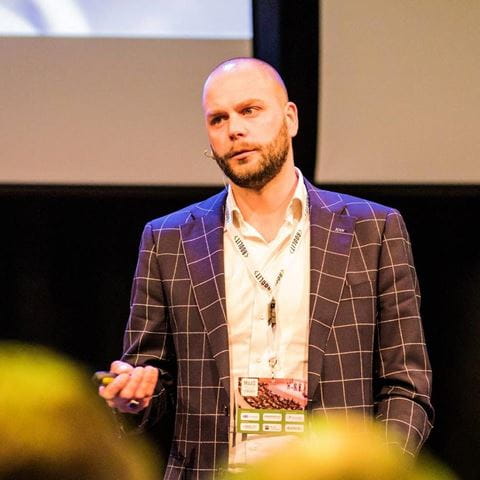
"What really stood out was the amount of energy behind these initiatives,” says Meerten. “There’s a clear willingness across the industry to find practical solutions to the challenges fleet managers are facing.”
So, what did the experience reveal about fleet management today?
1. Global strategy has to work locally
For international fleets, one challenge surfaced repeatedly: turning a global strategy into something that works across individual markets.
Countries are progressing at different speeds and operating in different conditions. A strategic direction that makes sense globally therefore needs enough flexibility to respond to local realities.
For fleet leaders, the challenge is increasingly about finding that balance between consistency and adaptability. A global strategy can set the destination, but the route towards it may look very different from one market to another.
2. Execution matters as much as ambition
Perhaps the clearest distinction between a promising idea and a compelling initiative was the ability to demonstrate tangible progress.
“What impressed me most was seeing concrete actions and results,” says Meerten. “The strongest examples could show where they started, what they had already achieved and what their next steps would be.”
That means moving beyond identifying a challenge or setting an ambition. Whether the objective is improving efficiency, introducing new technology or changing the driver experience, strong fleet strategies increasingly need to connect ambition with implementation and measurable outcomes.
It was also one of the most encouraging aspects of the judging experience. Rather than simply discussing where fleet management could go next, organisations are already testing approaches, implementing solutions and learning from the results.
3. Fleet management is becoming a balancing act
Cost efficiency remains a fundamental consideration for fleet leaders, but it is far from the only one.
Across the presentations, Meerten saw organisations working to combine financial objectives with employee satisfaction, innovation and wider strategic priorities. New technologies such as AI are increasingly part of that conversation too, but the real question is how they can deliver meaningful value rather than simply becoming another industry buzzword.
These priorities do not always naturally go hand in hand. The challenge is finding practical ways to make progress across several objectives at the same time.
And that is perhaps what left the biggest impression.
“What made me optimistic was seeing the willingness to change and adapt,” says Meerten. “Everyone may be at a different stage, but there is a real sense that the industry is moving forward.”
There may be no single blueprint for what comes next in fleet management. But the direction is clear: success will increasingly depend on the ability to adapt, demonstrate tangible value and translate strategy into measurable progress across very different markets.
At Ayvens, we work with international organisations to translate their fleet ambitions into practical strategies tailored to their markets, priorities and performance goals. From optimising costs and policies to improving the driver experience and supporting the transition to lower-emission mobility, our international consultancy teams help clients turn complex fleet challenges into measurable action.