
Beyond the bumper: why the first minutes define driver safety
We often assume that danger on the road increases with speed. However, the most ‘cognitively cluttered’ moments of any journey frequently occur before the car even leaves the parking spot.
Transitioning into traffic: the psychology of the first few minutes
The first few minutes of a drive represent a high-stakes mental handoff. The driver is transitioning from a hectic morning routine from the house or, during the day, from a high-pressure office meeting into the complex task of navigating traffic.
During this window, focus is often at its lowest due to secondary task overload. While the vehicle is in motion, the driver is frequently still:
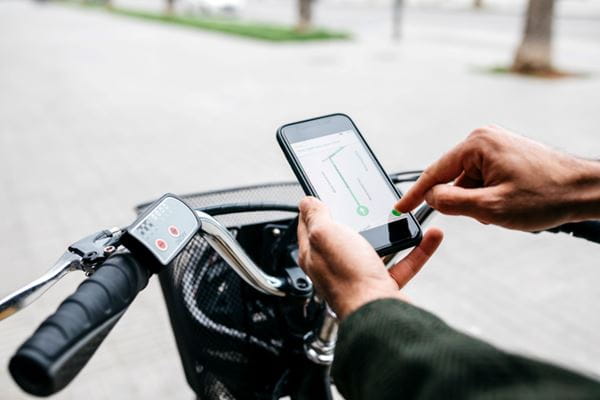
- Managing cognitive load: programming navigation
- Adjusting ergonomics: setting the seat and mirrors
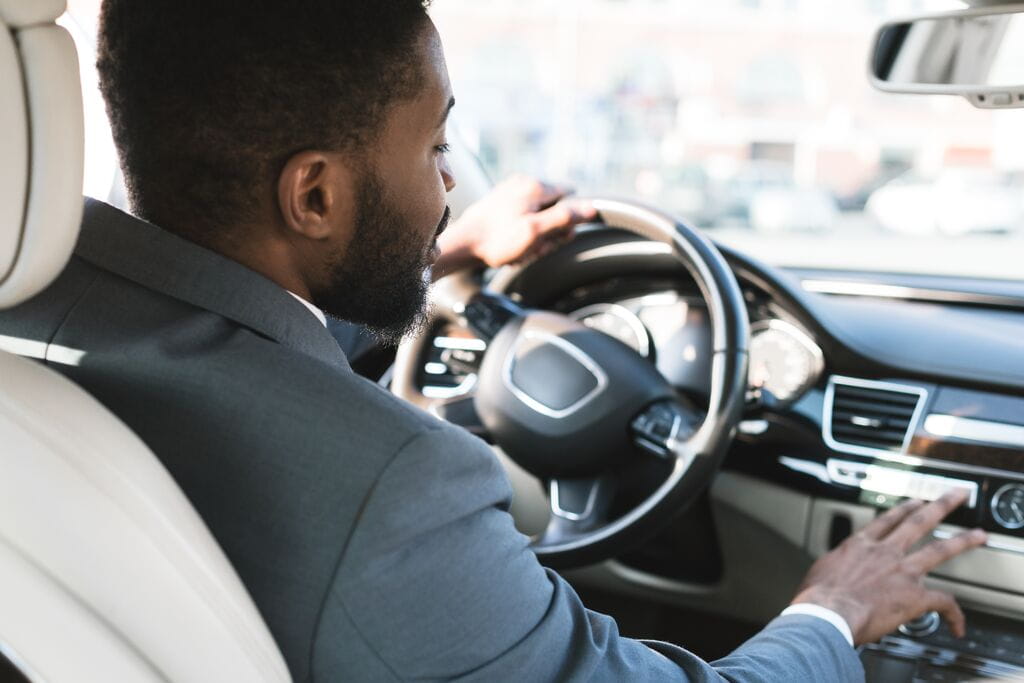
- Sifting through sensory distractions: selecting music or a podcast and adjusting the climate control
To bridge these first minutes in your vehicle, we advocate for a safe start. By leveraging intuitive infotainment systems that sync before the gear is shifted and utilizing pre-set driver profiles, we allow the car to handle the admin, so the driver can focus on the road.
The cortisol effect: the hidden cost of parking
Safety isn't just a physical metric; it’s a psychological one. A difficult parking experience (searching for a space or a near-miss with a concrete pillar) triggers a significant spike in cortisol1. This parking anxiety doesn't vanish once the engine is off; research2 indicates that the brain remains in a state of high alert in the first minutes of driving.
For fleet managers, this is a silent productivity killer. Because a stressed driver is a distracted employee. Furthermore, low-speed incidents represent a staggering percentage of insurance claims3. Beyond the immediate repair bill, these incidents carry heavy hidden costs:
- 1.Administrative friction: time spent filing reports and managing claims.
- 2.Operational downtime: the loss of vehicle uses during repairs.
- 3.Premium creep: the gradual, compounding increase in fleet insurance costs.

Precision technology as a productivity tool
In the eyes of a driver, a vehicle is often an extension of themselves4. This is why parking anxiety is a documented phenomenon: the brain is forced to process massive amounts of spatial data while managing the social pressure of not blocking traffic.
For the modern fleet manager, investing in high-spec safety tech, such as 360-degree cameras and ultrasonic sensors, is a masterclass in loss aversion. It is far more cost-effective to lease a vehicle that prevents a €500 bumper scuff than it is to manage the ripple effects of a minor claim.
Safety is a culture, not a feature
At Ayvens, we know that safety isn't just about surviving the major accidents; it’s about thriving in the small moments. By choosing vehicles that support driver psychology and automate the small tasks, we create a fleet that is safer, happier, and ultimately, more profitable.
1 Physiological and Psychological Responses to Driving Stress (Published in Psychosomatic Medicine / Journal of Psychosomatic Research) | Urban driving and parking maneuvers in tight spaces significantly elevate salivary cortisol levels, particularly in high-density environments. 2 The After-effects of Stress on Cognitive Control (Research from the University of California, Irvine) | high-cortisol events (like a near-miss or parking frustration) impair executive function and focus for 15–30 minutes post-event, impacting workplace performance. 3 Allianz Center for Technology (AZT) and Continental AG joint study on "Parking and Manoeuvring Accidents (2025) | low-speed manoeuvring and parking incidents account for approximately 40% of all physical damage claims in commercial fleets. 4 Possessions and the Extended Self by Russell W. Belk (Journal of Consumer Research, Vol. 15) | Russell Belk’s "Possessions and the Extended Self" explains the psychological phenomenon where damage to a vehicle is processed by the brain as a personal "injury," leading to heightened emotional distress.